Showing posts with label Hardware. Show all posts

Great HDD 4 TB SATA 6Gb/s Seagate Desktop

Great HDD 4 TB SATA 6Gb/s Seagate Desktop
Seagate Desktop HDD 4 TB SATA 6Gb/s NCQ 64MB Cache 3.5-Inch Internal Bare Drive ST4000DM000 is excellent buy if you are looking for a great Hard Drive and large amount hard drive space for your PCs. I have been using external (desktop type) hard drives for awhile now, I've had quite alot. I really wanted to network all my storage in one so I ventured into NAS arena. This is the first drive that I bought, did some research and found this guy "the work horse". Excellent speeds No shut downs, no lags. I've bought 2 of these from Amazon, they came quickly and the package was ok. They are working perfect. Really easy to install. The hard drive works. No issues. It's fast and suited to my purposes. Solid, expected performance, no complaints. It is so nice to have such a large amount of hard drive space. Finally I can store all my images and home videos in once place. I am happy with them and will buy more as soon as possible. 


Seagate Desktop HDD 4 TB SATA 6Gb/s Perfect when you need to:
  • Build desktop or all-in-one PCs to equip home servers
  • Create PC-based gaming systems
  • Implement a desktop RAID
  • Outfit direct attached external storage devises (DAS)
  • Build network attached storage devices (NAS)
I really enjoy this line of drives. I've had no problems with any of them and they run fast. The price I can't complain. I use my primary PC for development and gaming and I don't have any problems with this drive or fear of losing my stuff. Good product. Lot of space, fast I use it as external hard drive. No sound or any weird noises comes from the drive.

Definitely recommend. Please Click HERE to see more reviews and great price.

Great Hard Drive : Seagate Desktop HDD 4 TB SATA 6Gb/s NCQ 64MB Cache 3.5-Inch Internal Bare Drive ST4000DM000


Great WD Elements 3 TB USB 2.0 Desktop External Hard Drive

Great WD Elements 3 TB USB 2.0 Desktop External Hard Drive
WD Elements 3 TB USB 2.0 Desktop External Hard Drive are the right answer for simple, reliable add-on storage. Simply plug one in to a USB port and start saving your photos, music, video, and files. Installation was was truly "plug and play". It is simply took it out of the box, plugged it in, and it was immediately recognized by the DVR and formatted.

Features

This is a great external hard drive if you're not going to move it around a lot (which wasn't my intention anyways). Western Digital and Seagates are my hard drives of choice. This Drive Works as advertised. Plenty of space for everything, and very easy to set up. Outstanding performance and quality. They run forever with no issues. Quiet, black & Stealthy. Can carry your entire data base with you.
 
Having a reliable backup is extemely important to all computer owners. This hard drive has the capacity and design to protect and preserve all the data that we generate. You can keep movies and pictures on this hard drive to free up space on your laptop. It easily connects to the computer so you can watch anything on the TV at any time. The storage space is great. You can have 100+ movies and it is less than 25% full.  For the price, they are one of the best external drives you can get.

This Drive work fine. Great hard drive for the price. I'd highly recommend them to anyone looking to increase their storage capacity for their PC and back up their important data. BUY NOW HERE

What Do I Need To Build My Own Personal Computer

What Do I Need To Build My Own Personal Computer

Building The Computer. If you want to build your own Computer, you need to spec up your computer before making any buying decisions about computer components. The main thing you need to know is what you want to use the computer for. There is no point at all in using the cheapest components if your goal is to play World of Warcraft or any of the latest popular games. There is no need to build a computer with extreme specification if it is going to be used to type letters, play some solitaire and keep your receptionist occupied. Most people who build their own computers are either trying to save a few pennies or are wanting a computer for a specific purpose like video editing or gaming.

Now that you've got a better understanding of what goes into a computer, it's time to actually choose and buy the components you're going to use. In this lesson, I will show you how to most effectively pick out your parts. The article is supposed to be about the minimum requirements to build a working Computer. You will need:

1. The Case

If you want to buy a case, you need to know what size case you choose should match the kind of motherboard you're buying. If you're going for a very high performance computer with many drives and expansion cards, a full tower is probably overkill for most users. I recommended, Antec and Cooler master both make some of the best cases on the market.

2. The Motherboard

As you look at motherboards, you'll want to pay attention to quite a few things. Here are some of the more important features:

Socket Type: Your socket type (such as AMD's "AM2" socket, or Intel's "LGA 1155" socket) determines which processors you can use with that board. So, if you've already narrowed down the kind of processor you want, this is a good first step to narrowing down your motherboard. Look for a model with a socket type that matches your processor to ensure that the two are compatible.

Size: Motherboards generally come in three sizes: Mini ITX, Micro ATX, and full ATX. The more advanced features you need, the larger the motherboard will need to be, which will also determine the size of your case (and final machine). Generally, your motherboard will be dependent on these other factors, but if you absolutely need a super small machine, you'll want to filter your choices to reflect that.

Number and Types of external Ports: Look at the ports available on the motherboard. Do you need a lot of USB ports? You'll either want a motherboard that has them or enough PCI slots to support extra USB adapters. Do you need HDMI out? If you aren't getting a graphics card (and you're planning to use your computer with a monitor), you'll need graphics integrated with the motherboard. Do you want fast Gigabit LAN? Some motherboards only have 10/100, which won't give you fast enough speeds. Do you want any new, super fast USB 3.0 ports? If you want to take advantage of any USB 3.0 peripherals, you'll need compatible ports on your motherboard. If you're set on a motherboard that doesn't have a feature you need, you can add most with expansion cards, but life is always easier if the motherboard has them built in.

Amount of supported RAM: If you plan on having a lot of RAM in your machine, you'll need a motherboard that supports it. If you're overclocking your processor, you also want to check the top RAM speed your motherboard supports, since you'll probably have to boost your RAM speed when you overclock.

Integrated Graphics: If all you're going to do is browse the web, use Microsoft Office, and perform other simple tasks, you may be better off choosing a motherboard with integrated graphics. You only need to shell out for a separate graphics card if you're playing video games, and maybe if you're playing HD video (though some integrated graphics chips can even do that nowadays). If you're getting a separate graphics card, it doesn't really matter if your motherboard has integrated graphics or not.

Number of SATA Ports: This determines how many internal hard drives and optical drives you can have. For most builds, this is only really a concern if you plan on having a lot of drives in your computer (like if you're building a server or a NAS).

Number of PCI Slots: You can only have as many expansion cards as you have PCI slots, so if you want a dedicated video card (or two), a dedicated sound card, extra USB ports, extra LAN ports, a Wi-Fi adapter, or other expansion cards you need to make sure your motherboard has enough of them.

Chipset: Your motherboard's chipset determines a lot of the more advanced features it has. Some chipsets support overclocking, some do not. Some support SLI and Crossfire (using multiple video cards in tandem), some do not. Others are better for turning into Hackintoshes. If you didn't understand any of the things I just said, you probably don't need to pay too close attention to this but if you want certain advanced features, chipset will narrow your selection considerably.

Brands Recommend : ASUS, GIGABYTE, and MSI are probably the biggest name in motherboards. However, BIOSTAR and ASRock are well known for good budget boards, if you're trying to keep the cost down.

3. The RAM

Memory (RAM) in today's world a minimum of 2 GB is essential, 4 GB or 8 GB is better. You can buy for 2 GB first if you are trying to keep the cost down. You can upgrade your system memory then if you have budget. If you are buying RAM, the first thing you do is look at the motherboard's spec list. Most RAM nowadays is "DDR3", which is the latest generation of RAM. Popular Brands for the best RAM on the market are Crucial, Corsair and Kingston. You won't find a huge difference between brand.

4. The Graphics Card

If your motherboard does not have it on board a Graphics card will be required. Brands recommended : NVIDIA and ATI (now branded as AMD). MSI and ZOTAC are also popular choices, as are ASUS, and Sapphire.

5. The Hard Drive(s)

Hard Drive, A range of hard drives from 250 GB to 3 TB are available at present. Brands to recommend: Western Digital, Seagate, Hitachi, Samsung, and Toshiba are all good choices.

6. The Optical Drive

Optical Drive, in old school tech the CD drive, today you will be looking at DVD Writers or Blu-Ray. Brands recommend : Samsung, Sony, and LG are all great manufacturers.

7. The Power Supply 

The power supply is actually one of the most important choices in your build. This is not an area you want to skip. Reviews on the net are rarely useful, either, with the exception of a few reputable sites like Jonnyguru.com. The best you can do is buy from a good brand.

8. Keyboard and Mouse


9. Monitor


The components above will give you to build a working PC, to add sound a set of speakers and a sound card if the motherboard does not have one on board.

How To Upgrade Your Laptops System Memory

Upgrade Laptops System Memory


Upgrade Laptops System Memory.It's not as hard as you might think to upgrade your laptop's memory and only requires one or two tools and a little research to do it. Instead of taking your laptop to your local computer repair shop, and spending money to have it done, why not do it yourself? 

This guide will show you how to upgrade your laptop's computer memory. Installation of RAM is one of the easiest way to speed up your computer as only hardware installation is needed, without the need of any software. It is also relatively inexpensive to upgrade compared to other parts.

Here's the steps how to upgrade your laptops System Memory :

After you've bought the manufacturer specified memory for your laptop along with the amount of memory you want to upgrade it to, all you need to do is install it. Just follow the steps how to install and upgrade your laptop system memory below :

1. Save your work, shut down your computer, and close the display.
2. Disconnect all external devices attached to the laptop (like printers, flash drives, and headsets).
3. Unplug the A/C adapter from your computer.
4. Turn the laptop upside down on a flat surface.
5. Remove the laptop battery
6. Loosen the 3 screws on the memory module compartment
7. Lift the compartment cover away from the computer
8. Remove the existing memory module(s)
To remove the memory, all you have to do is push out on the silver rails that run up both sides of the memory stick. The "rails" have a little bend or nodule that click in to the side of the memory stick (95% of the time this rail system is used, but a few manufacturers use a different system on some of their laptops. But, all in all, the different configurations are easy to figure out). Just use your fingers to push the rail out to the side simultaneously on both sides and the memory stick should pop up. Caution, don't try to force it out with any metal tools, if your fingers are too big, use a toothpick or some other plastic (like a credit card) to move the rail to the side, one side at a time, while gently lifting up on the memory stick. If it still won't release, try pressing down on it, or you might try to gently wiggle it a bit to see if that will loosen it up.

9. Insert the new RAM module into the compartment
To install the new memory, Insert memory stick (copper pin side down) and in to the memory slot. The memory slot has a built in crossbar that corresponds to a slot cut in to the memory module, be sure to line these up. Make sure the module is seated all the way down in to the on board slot, then gently push down until you hear a click, don't force it. Sometimes you might have to move the rails out a little bit to get the memory to seat correctly.

10. Align the tabs of the cover with the notches on the computer and close the cover.
11. Tighten the screws on the memory compartment.
12. Replace the battery, reattach the external devices, and plug the laptop back into the A/C outlet.


Now you're all done! Fire up your laptop and go to your Computer icon on the desktop or from the start menu, right click, select properties at the bottom of the drop down menu to bring up the System window, and check the "Installed Memory" line to see the new memory you've just installed.

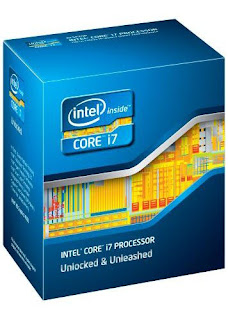
Fantastic Intel Processor Core i7-3770K Quad Core

Intel Processor

Intel Core i7-3770K Quad-Core Processor 3.5 GHz 8 MB Cache LGA 1155 - BX80637I73770K.
If you are looking for fantastic Intel Processor, Intel Core i7-3770K Quad-Core Processor 3.5 GHz 8 MB Cache LGA 1155 - BX80637I73770K recommended. I highly recommend this processor for anyone. This is a great top of the line processor and has been amazing. The only people who should not get this is people who have unlimited money and that love to overclock a machine to the fullest extent just to show how high it could go. Unless you're that person you should get this processor.

The Intel Core i7 processor powers through all tasks including gaming, photo editing, advanced office tasks and content creation. With multiple cores the Intel Core i7 processors are multi-tasking monsters able to tackle any task. The advanced power saving technologies in the Intel Core series of processors helps keep running costs low.

What are people Saying?

The i7-3770k is a fantastic processor! Out of the box (with no overclocking), I got a Windows Experience Index rating of 7.7 (on a 1.0 to 7.9 scale). The CPU installation is quite easy and the 'k' at the end of 3770k means the processor is unlocked for easier overclocking. The HD 4000 graphics are also great! I got a Windows Experience Index of 6.5 in both graphics categories without the need for a discrete GPU (if you don't need serious graphics performance, this processor could save you money on a graphics card!).

This processor that I bought came in a very good packaging. I really didn't need this much power but I wanted my computer to be fast. I just installed this 2 days ago With no trouble at all I overclock it at 4.67 Very stable And running cool. The price was reasonable and received it in less than 3 days. I would recommend this processor to anyone.

If you want to purchase Intel Core i7-3770K Quad-Core Processor 3.5 GHz 8 MB Cache LGA 1155 - BX80637I73770K. You should not miss this opportunity after you search a lot for where to buy. Read more Customer Review here "Intel Core i7-3770K Quad-Core Processor 3.5 GHz 8 MB Cache LGA 1155 - BX80637I73770K"